
Views: 0 Author: Site Editor Publish Time: 2026-05-18 Origin: Site


An executive office desk is far more than a functional workspace. It serves as a visible indicator of leadership style and represents a long-term capital investment for any organization. Many professionals underestimate how deeply this central piece of furniture dictates room energy and daily productivity. Buyers must look past glossy marketing hype to balance aesthetic prestige with harsh structural realities. You need to account for HVAC micro-climates, heavy tech-stack loads, and strict ergonomic requirements before finalizing a purchase. Often, a visually stunning desk fails under the weight of modern dual-monitor setups or cracks due to dry indoor office air.
We built this guide to provide a highly skeptical, evidence-based framework for your next furniture procurement. You will learn how to evaluate a classic solid wood desk against highly efficient modern engineered designs. Ultimately, we ensure your final choice perfectly aligns with your organizational culture, client expectations, and personal workflow.
Solid wood offers unparalleled repairability and legacy prestige but requires strict climate control (30-50% humidity) to prevent warping.
Modern commercial-grade MDF and premium veneers offer superior dimensional stability for agile offices and motorized standing frames.
Space planning is non-negotiable: Proper executive setups require at least 36 inches of rear chair clearance and a minimum 1-inch desktop thickness for structural integrity.
The choice between a vintage desk aesthetic and a contemporary silhouette should map directly to client expectations and industry type (e.g., legacy law vs. high-growth tech).
Solid wood remains the ultimate symbol of corporate heritage and permanence. Manufacturers build these units entirely from natural timber logs. They do not use synthetic cores or composite layers. This approach makes solid wood ideal for long-term investments. Well-maintained pieces easily offer a 30 to 50-year lifespan. They fit perfectly into environments prioritizing natural character, distinct grain patterns, and absolute luxury.
You must evaluate hardness and durability using the recognized industry standard: the Janka Scale. A higher Janka score indicates greater resistance to denting and daily wear. For example, White Oak scores an impressive 1360. It handles dropped pens and heavy coffee mugs easily. American Walnut scores around 1010. It looks incredibly luxurious but requires slightly more care to avoid surface dents.
However, implementation carries real risks. A solid wooden executive desk is extraordinarily heavy. Relocating it requires a dedicated facilities team. More importantly, solid timber remains highly susceptible to micro-climate changes. If you place it near active HVAC vents, radiators, or in direct sunlight, the wood will expand and contract. This natural movement often leads to unsightly warping or structural cracking over time.
Premium veneer bridges the gap between natural beauty and modern structural reliability. It is ideal for buyers wanting a 100% real wooden aesthetic while demanding enhanced resistance to temperature fluctuations. High-end manufacturers slice authentic hardwood into thin sheets and bond them to a synthetic core.
The structural reality of premium veneer involves using a remarkably thin layer of real wood. This layer typically measures less than 2mm thick. Manufacturers press this authentic slice over a highly stable plywood or medium-density fiberboard (MDF) core. You get the exact visual and tactile warmth of real timber without the unpredictable expansion issues.
You must note its primary vulnerability. Unlike solid lumber, you cannot aggressively sand out deep scratches. If a heavy metal object gouges the surface and pierces the thin veneer layer, the composite core underneath becomes visible. Repairs at this stage require specialized synthetic fillers rather than simple sanding.
Commercial-grade MDF dominates contemporary corporate spaces. It is the absolute efficiency king for high-traffic modern offices, minimalist designs, and heavy daily usage. Do not confuse high-density commercial MDF with cheap particleboard. Modern MDF utilizes highly compressed wood fibers bonded under extreme heat and pressure.
The performance truth of a modern office desk built from high-density MDF is undeniable. When manufacturers seal it using advanced thermally fused edge-banding, the core becomes highly moisture-resistant. It remains entirely immune to natural wood's frustrating expansion and contraction cycles. It provides a flawlessly flat, seamless surface for intensive daily work.
Material Type | Primary Advantage | Major Vulnerability | Ideal Office Environment |
|---|---|---|---|
Solid Wood | Lifelong repairability and legacy prestige | Warping from HVAC climate shifts | Climate-controlled traditional suites |
Premium Veneer | Authentic wood look, high dimensional stability | Deep scratches expose the inner core | Dynamic corporate environments |
Commercial MDF | Flawless surface, highly budget-efficient | Edge peeling if cheaply manufactured | Agile, high-growth tech spaces |
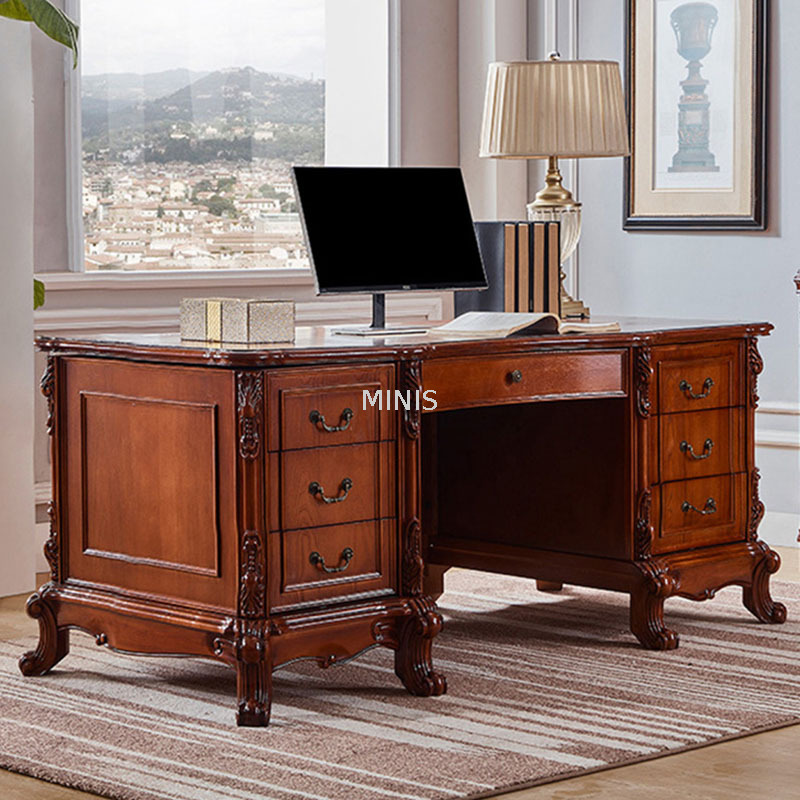
Design language speaks volumes before you even shake a client's hand. The traditional aesthetic relies on distinct visual cues. You will typically find heavy pedestal bases resting squarely on the floor. Ornate carved legs, intricate beveled edges, and rich, deep patinas define this category. Common species include dark Mahogany, rich Cherry, and aged Walnut.
The success criteria for a true vintage desk is clear: it projects unwavering stability, deep authority, and historical trust. This psychological anchoring makes it best suited for established law firms, private wealth management institutions, and classic corporate boardrooms. It tells visiting clients you possess a long-standing market presence.
Modern designs deliberately break away from heavy visual anchors. They embrace visual cues like floating desktops, slender asymmetrical layouts, and daring mixed materials. You will frequently see combinations of tempered glass, brushed steel legs, and matte laminate surfaces. These elements create an open, airy feeling within the room.
The success criteria here focuses on different corporate values. A modern silhouette communicates total transparency, structural agility, and forward-thinking leadership. This layout proves ideal for high-growth tech companies, dynamic creative agencies, and open-plan executive suites. It removes the physical barrier between leader and guest, fostering a highly collaborative atmosphere.
Many leaders find themselves caught between respecting heritage and embracing the future. Transitional designs solve this dilemma perfectly. They actively blend classic wood warmth and texture alongside modern wire-management systems and modular side credenzas. You retain a commanding corporate presence while accommodating advanced dual-monitor arms and complex IT hardware seamlessly.
Selecting beautiful office furniture means nothing if the room layout feels cramped or awkwardly staged. Space planning remains a non-negotiable step in the procurement process. You must measure your floor plan meticulously to ensure proper workflow.
Rear Clearance: You must leave a minimum of 36 inches directly behind the desk. This gap allows for unrestricted ergonomic chair movement. It prevents the chair wheels from damaging baseboards and gives leaders comfortable pivoting room.
Guest / Walkway Clearance: You must maintain a minimum of 42 inches in front of the desk. This zone accommodates comfortable client seating. It also ensures unobstructed foot traffic for assistants handing over documents.
Size dictates physical presence. For true executive standards, you should target models between 72 and 84 inches wide. The depth should comfortably range from 30 to 36 inches. This footprint provides ample room for sprawling legal documents alongside a dedicated digital workstation.
You must also demand strict thickness validation. An executive work desk requires a minimum desktop thickness ranging from 1 to 1.5 inches (2.54cm to 3.81cm). Anything thinner risks sagging and bowing under the intense concentrated weight of heavy multi-monitor C-clamp setups. Thin tops also resonate hollowly when struck, instantly diminishing the perceived quality of the furniture.
Consider how the desk interacts with the surrounding room architecture. Center-room placement establishes ultimate dominance. However, this configuration strictly requires 360-degree finishing. The front modesty panel must look just as immaculate as the top surface. Alternatively, L-shaped configurations sit beautifully against window corners. They offer brilliant functional separation, allowing executives to pivot smoothly between dedicated computer tasks and intensive paperwork review.
The ergonomic revolution changed how leaders work. However, motorized standing integration presents unique physical risks. Standard dual-motor sit-stand frames struggle immensely under the sheer deadweight of heavy solid oak or mahogany slabs. Pushing these motors to their maximum load capacity dramatically shortens their operational lifespan and increases failure rates.
The optimal solution involves switching materials. Premium veneer or high-density architectural bamboo solves the weight crisis effortlessly. Bamboo offers nearly 40% higher tensile strength than traditional oak at a mere fraction of the total weight. This strength-to-weight ratio makes it the ultimate choice for motorized lifting frames.
Modern workflows demand immense power and constant data connectivity. When evaluating options, carefully inspect the built-in technology channels. Look for integrated power/data ports, subtly hidden CPU compartments, and dedicated under-desk wire-routing trays.
Avoid Retrofitting: Attempting to drill large grommet holes into an antique wooden piece often ruins its structural integrity.
Assess Cord Concealment: Dangling cables destroy the pristine aesthetic of an executive suite immediately.
Examine Access Panels: Ensure IT staff can easily reach surge protectors without dismantling the entire desk structure.
You must evaluate your daily physical workflow tools. Heavy paper pushers, architects, or executives conducting drafting work require utterly flawless, seamless surfaces. High-pressure laminates or tightly sealed MDF ensure a smooth writing experience. Conversely, executives who operate strictly via laptops and tablets can easily utilize heavily textured, open-grain natural woods without compromising their daily output.
Construction methods reveal the true lifespan of any corporate furniture piece. You should immediately reject high-priced desks relying solely on industrial glue and standard metal screws. These cheap methods inevitably loosen as the building experiences seasonal temperature shifts.
Instead, look for traditional dovetail joints or mortise-and-tenon connections, particularly inside drawer boxes and load-bearing corner columns. These interlocking physical wood connections distribute stress evenly. They guarantee the drawers will not sag or detach even after decades of aggressive daily slamming.
If you choose modern engineered solutions, you must verify the edge finishing technique. Ensure the manufacturer uses thermally fused edge banding. Low-quality manufacturers simply glue thin strips of plastic to the MDF edges. These glued edges inevitably peel back after repeated friction from office chairs or belt buckles. Peeling edges expose the porous inner core, becoming the primary point of catastrophic moisture failure in engineered furniture.
Air quality in enclosed private suites directly impacts cognitive performance and long-term health. For any MDF or engineered options, demand formal environmental documentation. You should verify ISO 14001 manufacturing certifications. Furthermore, demand strict E0 or E1 emissions standards compliance.
These stringent ratings guarantee zero harmful VOCs (Volatile Organic Compounds) or toxic formaldehyde off-gassing. Uncertified cheap materials slowly release chemicals into the trapped air of a closed executive office, causing headaches and respiratory fatigue over long hours.
Inspection Category | Warning Sign (Reject) | Quality Indicator (Approve) |
|---|---|---|
Drawer Joinery | Staples, basic glue, exposed screws | Dovetail or mortise-and-tenon interlocking |
Surface Edges | Glued tape, visible seams, sharp plastic | Thermally fused, seamless edge banding |
Health & Safety | No documented emission ratings | ISO 14001, E0/E1 Formaldehyde standards |
Choosing the perfect executive desk requires balancing aesthetic aspirations with concrete environmental and functional realities. Your final decision matrix should be straightforward. Choose solid wood if you optimize for corporate heritage, easily repairable surface scratches, and classic, unwavering authority. Conversely, choose modern engineered designs like premium veneer or commercial MDF if you prioritize exact dimensional stability, sit-stand motorized ergonomics, and flawless integrated technology.
Take direct action before finalizing your procurement. Measure your specific executive suite footprint, confirming you have a 36-inch rear clearance. Confirm your building's HVAC stability to rule out severe humidity swings. Finally, always request physical material swatches from the manufacturer to inspect edge banding and finish quality under your actual office lighting before issuing a purchase order.
A: Not if sourced correctly from reputable manufacturers. High-quality commercial-grade modern office desks comply strictly with rigorous E0/E1 emissions standards. These certifications ensure the core materials and adhesives are entirely safe, stable, and completely free from harmful formaldehyde off-gassing, even in poorly ventilated rooms.
A: Yes. Solid wood and high-quality plywood-core veneer desks offer the absolute highest screw-holding power and grip strength for heavy C-clamp monitor mounts. MDF is slightly weaker in core density for clamping forces and may require additional metal reinforcement plates to prevent localized surface crushing.
A: Carefully inspect the edges and corners of the desktop. On a genuine solid wood surface, the end-grain will naturally flow over the edge, showing continuous rings. On a veneer surface, the edge pattern will look like a separate, attached strip or display a sharply disconnected grain pattern.
A: Bamboo and high-quality wood veneers over light synthetic cores are highly recommended. They provide the necessary structural strength and premium aesthetic while keeping the overall deadweight highly manageable. This lighter footprint dramatically maximizes the operational lifespan of the desk's dual lifting motors.


