
Views: 0 Author: Site Editor Publish Time: 2026-02-20 Origin: Site


Choosing the right conference table can significantly impact your office dynamics. Did you know that the size and shape of a table can influence collaboration and productivity? In this article, we’ll explore how to choose the best conference table for your space. You’ll learn how to consider room size, seating capacity, shape, and technological needs. By the end, you'll be equipped to make a well-informed decision that enhances your meeting space and supports effective collaboration.
Conference table dimensions not only depend on seating capacity but also on the intended meeting style. A good rule of thumb is 24-30 inches of width per person to ensure comfortable working space for each attendee. Additionally, table length should allow for effective interaction, avoiding overly long tables that hinder communication. Adjusting these dimensions based on room shape and type of meetings will ensure that the table supports both comfort and functionality.
Choosing the right conference table size not only ensures individual comfort but also contributes to an efficient meeting environment. Considering these factors will help create a functional and spacious meeting room.
| Key Consideration | Description | Technical Requirements | Application/Considerations |
|---|---|---|---|
| Width per Person | Ensure 24–30 inches (60–76 cm) of width per person for comfort. | Sufficient space to accommodate laptops, paperwork, and devices. | For smaller teams, 24 inches is enough; larger teams need up to 30 inches. |
| Table Length | Ensure the table is long enough for all attendees and promotes smooth communication. | Length should be adjusted based on the number of participants, avoiding overly long tables that hinder communication. | For 6 people, 6–8 feet is ideal; for 12 people, 12 feet is recommended. |
| Room Clearance | Allow at least 3–4 feet (90–120 cm) of space around the table for free movement. | Ensures enough space for chairs to slide out and for people to move comfortably. | A cramped room will restrict movement and hinder productivity. |
| Space for Technology Integration | Leave room for built-in power outlets, USB ports, and data ports. | Adding technology may require extra width for devices and cables. | Ensure enough space to accommodate power and data ports without crowding the table surface. |
| Room Layout and Shape | The shape and size of the room impact table selection. Small rooms may benefit from round or square tables. | Ensure the table fits comfortably within the room, considering windows, doors, and furniture placement. | Rectangular tables work well in narrow rooms; larger rooms may benefit from a shape that enhances communication. |
Tip: Make sure the conference table size matches the room dimensions. A table that's too large will make the space feel cramped, while a table that's too small will reduce collaboration and communication.
The shape and size of the conference room heavily influence your table choice. A small room (6-8 people) may need a smaller, compact table like a round or square design, whereas larger rooms (12-14 people) can accommodate longer rectangular or boat-shaped tables. The room’s layout, including factors like windows and doors, will also affect the table’s size, as you want to maximize space while leaving ample room for movement.
When selecting a table for smaller teams, it's essential to balance comfort and functionality. A 6–8 feet long table with 3-4 feet of width ensures that each participant has enough personal space for laptops and materials. Additionally, round or square tables are ideal for enhancing collaboration by encouraging equal participation. Ensure that there is sufficient clearance around the table (at least 3 feet) to avoid a cramped feeling, which could negatively impact productivity.
An 8–10 feet long conference table works well for medium-sized groups. This size provides ample space for each participant while not overwhelming the room. The table should be 4 feet wide to ensure comfort without crowding the participants. A rectangular or boat-shaped table is recommended to allow easy access for all attendees, especially if the room has multiple entry points.
For larger meetings, a 12–14 feet long table with a 4.5–5-foot width provides ample space for each participant to comfortably use their materials. Rectangular or oval tables are ideal, as they maximize seating while ensuring better communication across the table. It's crucial to leave at least 4-6 feet of clearance around the table to promote easy movement and a comfortable environment. As technology integration becomes more important, consider adding extra space for monitors or other devices without reducing the surface area available for participants.
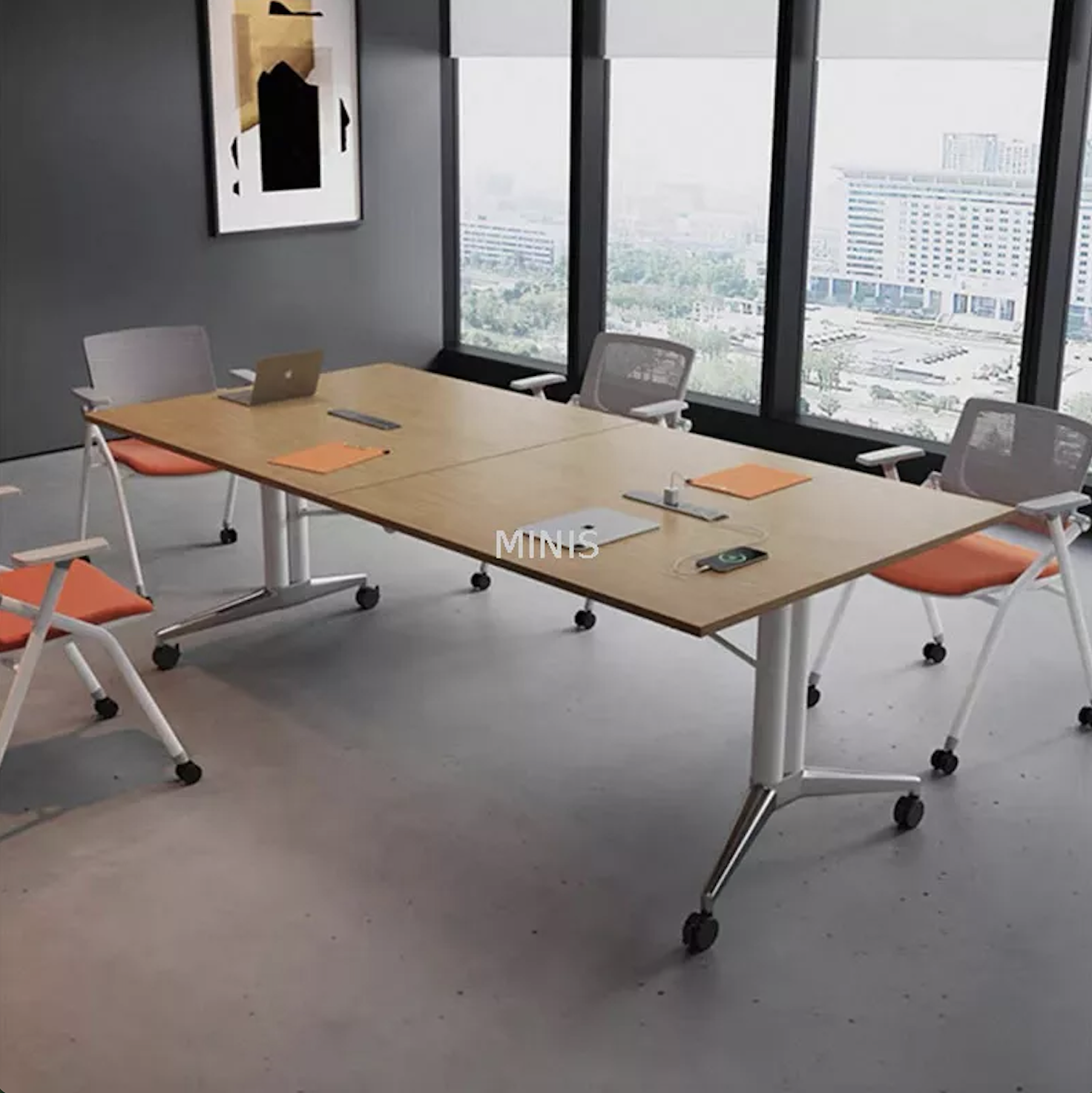
Rectangular tables are widely used in professional settings due to their ability to maximize seating capacity. They work well in narrow or long rooms, offering a straightforward layout that encourages efficient communication. The linear arrangement allows for clear sightlines and hierarchical seating, making them ideal for boardrooms and formal meetings. However, the linear design can sometimes limit interaction across the table, which may reduce collaborative engagement, especially in larger meetings. To improve communication, consider integrating technology like video conferencing equipment within easy reach of all attendees.
Round tables eliminate the concept of a "head" of the table, creating a more inclusive and egalitarian environment. They promote collaboration by ensuring that all participants have an equal view and are encouraged to engage equally. Ideal for smaller groups (4-6 people), round tables foster a sense of community and discussion. However, they require more floor space than rectangular tables and may not be the best fit for larger groups, as they limit the seating capacity and may make it difficult to interact with participants across the table. Ensure the room is spacious enough to accommodate the table comfortably.
Boat-shaped tables offer the benefits of a rectangular design but with curved ends that improve visibility for all participants, especially during presentations. This design ensures that everyone, even those seated at the far ends, has a clear view of the speaker and any shared media. Boat-shaped tables are particularly effective in medium to large meetings where clear sightlines and collaborative discussions are critical. The shape also promotes a more dynamic flow of conversation, making it ideal for meetings that require active participation from all attendees. These tables work well for video conferencing as well.
Oval tables combine the best of both rectangular and round designs. The clean lines of a rectangular table with the smooth, inclusive feel of a round table make it perfect for medium-sized groups. They provide a sophisticated, professional appearance while offering a clear leadership end, which may be important in formal settings. Oval tables are ideal for spaces that require a balance between organization and open communication, as they allow for more natural interaction than rectangular tables but with the added benefit of not losing seating capacity. They adapt well to various room shapes and sizes.
To ensure a perfect fit, it’s essential to measure your conference room accurately. Start by measuring the length and width of the room, excluding doors and windows. It’s also important to note the height of the room, especially if you're considering larger tables or options with integrated technology, which may require extra clearance.
Don’t forget to measure your doorways, hallways, and elevators to ensure the table can be delivered without issues. Large tables may require removable components or the use of a freight elevator for easy installation. Planning ahead for these logistical details can save time and prevent unnecessary stress during the delivery process.
Allow a minimum of 3–4 feet of clearance behind chairs to ensure participants can move freely without disturbing others. In more spacious rooms or high-end settings, aim for 4–6 feet of clearance for a more luxurious, open feel. These simple measurements will help you create a comfortable and functional meeting environment.
With the increasing reliance on technology in meetings, it’s essential to consider built-in power outlets, data ports, and cable management features when selecting a conference table. Ensure the table has enough space to accommodate these features without overcrowding the surface. Adding technology like monitors or video conference systems may also require extra space, so plan accordingly.
Modern conference tables may need additional width to fit power outlets, video equipment, or cable management systems. As technology continues to play a larger role in meetings, accounting for these needs while selecting table size will ensure your table remains functional and efficient. Consider leaving 6–8 extra inches for tech integration to ensure seamless connectivity.
Choosing the right material for your conference table affects both its appearance and durability. Understanding the pros and cons of each material will help you make an informed decision for your office needs.
| Material Type | Advantages | Disadvantages | Ideal Use Cases | Maintenance Requirements |
|---|---|---|---|---|
| Wood | Classic, durable, and offers a warm feel, perfect for formal settings. | Requires regular maintenance, sensitive to moisture. | Best for boardrooms and formal settings, showcasing stability and tradition. | Regular cleaning and waxing; avoid damp environments. |
| Laminate | Cost-effective, durable, available in a wide range of colors and designs. | Appearance can be plain, prone to scratches. | Ideal for small businesses, everyday meeting rooms, or budget-friendly options. | Easy to maintain, wipe clean as needed. |
| Glass | Modern, sleek, and provides an open, airy look. | Fragile, prone to fingerprints, requires careful maintenance. | Perfect for innovative businesses, modern offices with a youthful, tech-forward feel. | Frequent cleaning to prevent smudges, careful handling to avoid scratches. |
| Metal | Strong structure, contemporary design, perfect for industrial-style spaces. | Heavy and may not suit all office styles. | Suitable for offices with an industrial or modern aesthetic, tech or high-energy businesses. | Easy to clean, but regularly check the stability of connecting components. |
Tip: If your office leans toward a modern aesthetic, glass or metal materials might be a better fit, providing a clean, sleek look that aligns with contemporary designs.
The material also affects the table’s weight and thickness, which could influence the table's final dimensions. For example, a solid wood table may need additional support for larger sizes, whereas a metal or glass table might be lighter and more flexible in size. Make sure the material fits your space’s aesthetic and accommodates the necessary seating and tech features.
Choosing the right conference table is essential for fostering a productive and professional meeting environment. Key factors such as dimensions, seating capacity, and room layout must be carefully considered to ensure the table enhances collaboration. Foshan Minis Furniture Co., Ltd. offers high-quality conference tables that align perfectly with your office needs. Their products are designed to optimize both functionality and aesthetics, helping you create a space that promotes efficient communication and leaves a lasting impression on your clients.
A: For small teams (4-6 people), a conference table between 6–8 feet long and 3-4 feet wide is ideal. It provides enough space for each participant while fitting comfortably in a compact room.
A: Rectangular tables are great for larger groups, while round tables promote collaboration. Boat-shaped and oval tables offer a balance, improving visibility and communication during meetings.
A: When selecting a conference table, consider the room size, seating capacity, shape, and clearance space. A well-sized table ensures comfort and productivity for all participants.
A: Room size affects the dimensions and shape of the conference table. Smaller rooms require compact tables, while larger rooms can accommodate longer, more formal table designs.
A: Measure the room’s length and width, ensuring at least 3-4 feet of clearance around the table for comfortable movement. Don’t forget to account for doorways and entry points.


