
 English
Views: 0 Author: Site Editor Publish Time: 2026-07-13 Origin: Site


Corporate boardrooms often feature a silent battle between aesthetics and physical wellness. Plush executive seating might look authoritative. However, it frequently lacks the biomechanical support required for long-term health. Settling for standard bonded leather models leads to rapid material degradation. This reality forces high replacement cycles. Users also experience decreased daily productivity. These traditional designs trap heat and force poor posture during extended meetings.
We will explore a strict evaluation framework for selecting a premium seat. You will learn how to balance dynamic lumbar support with durable, high-end materials. This guide provides actionable criteria for finding the right seating solution. It will help you navigate material grading, ergonomic mechanisms, and sourcing strategies. Ultimately, you can secure seating blending executive authority with uncompromising physical support.
Genuine leather offers superior breathability and durability over synthetic PU or bonded alternatives, drastically reducing long-term replacement cycles.
An effective executive manager chair must feature independent adjustable mechanisms (synchro-tilt, dynamic lumbar) rather than a fixed-back plush design.
For scalable B2B procurement, partnering with an OEM ergonomic chair manufacturer ensures consistent quality control and customized warranty terms.
A true ergonomic swivel office chair requires rigorous load testing and specific foam density to maintain its supportive profile beneath a leather upholstery.
Material choices directly dictate how long office furniture remains functional. Buyers often face a choice between synthetic alternatives and natural hides. Understanding material science reveals why investing in authentic materials delivers a better physical return on investment over time.
Durability vs. Degradation
Many offices struggle with bonded leather peeling within 18 to 24 months. Manufacturers create bonded leather by gluing leftover hide scraps together using polyurethane. Friction and regular use quickly break down these synthetic adhesives. The top layer begins to flake off. This degradation ruins the professional appearance of the workspace.
In contrast, a high-quality genuine leather office chair boasts a lifespan exceeding ten years. Top-grain hides retain their structural integrity through thousands of sitting cycles. They resist tearing and puncturing. The material actually develops a richer patina over time instead of deteriorating.
Thermal Comfort & Breathability
Synthetic executive chairs frequently create a "sweat trap" for users. Polyurethane layers block air circulation completely. Body heat gets trapped against the skin during long sessions. This leads to profound discomfort and distraction.
Authentic animal hides feature natural pores. These pores allow the material to breathe naturally. The leather adapts to room temperature rapidly. It also dissipates excess body heat. This thermal regulation keeps users comfortable through marathon meetings. Proper airflow reduces fatigue and improves focus.
Professional Optics
Office environments require furniture projecting authority and stability. Authentic leather visually signals competence in executive spaces. However, traditional plush designs often sacrifice health for this aesthetic. Modern manufacturing now bridges this gap successfully. You can secure professional prestige while maintaining rigorous health-focused design standards.
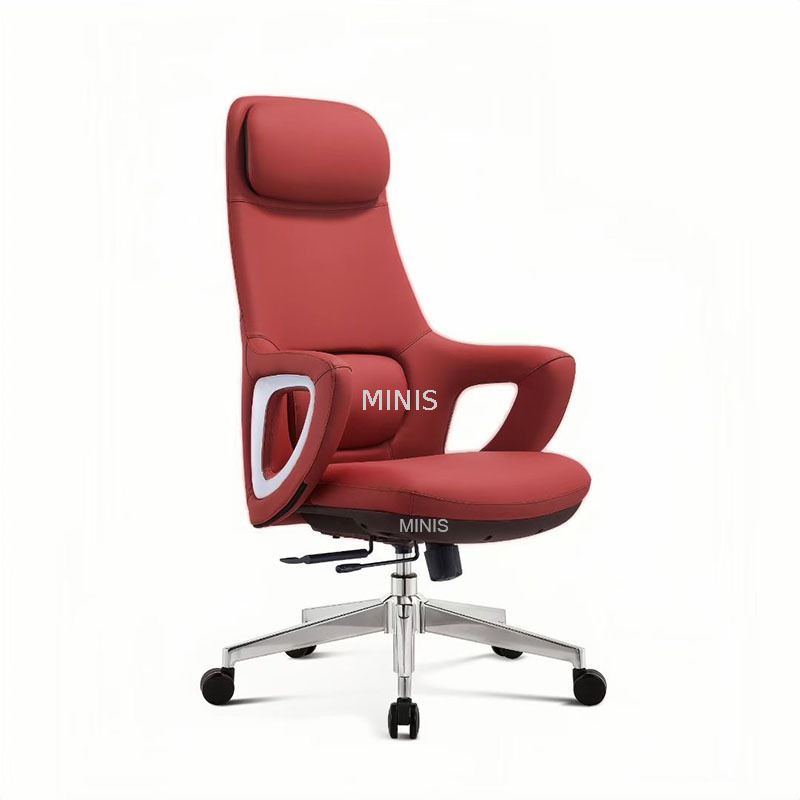
A premium finish means nothing without a supportive biomechanical framework. Executive roles often demand long hours at a desk. An exceptional ergonomic office chair must actively support the spine. Evaluating the underlying mechanics prevents chronic pain.
Dynamic Lumbar Support
Static foam cushions fail to accommodate human movement. When you shift your posture, a static cushion loses contact with your lower back. You must seek out tension-responsive lumbar systems instead. Dynamic lumbar mechanisms move independently from the main backrest. They track your spine as you lean forward or recline. This constant contact prevents your lower back from slouching into a dangerous C-curve.
Synchro-Tilt Mechanisms
Traditional tilt mechanisms pivot the seat and backrest at the exact same angle. Reclining lifts your feet off the floor abruptly. This restricts blood flow to your thighs. Synchro-tilt mechanisms solve this problem using a 2:1 recline ratio. The backrest reclines two degrees for every one degree the seat pan tilts. Your feet remain perfectly flat on the ground. This feature is absolutely critical for healthy blood circulation during long hours.
Multi-Dimensional Armrests (3D/4D)
Fixed armrests force your body into unnatural positions. They cause you to hike your shoulders or splay your elbows. Multi-dimensional armrests prevent these upper body strains. Look for 3D or 4D adjustability.
Height: Aligns your forearms parallel to the desk surface.
Depth: Slides forward or backward to clear desk edges.
Width: Accommodates different shoulder spans.
Pivot: Angles inward to support texting or typing on mobile devices.
Base Stability and Mobility
The foundation of any heavy-duty swivel office chair requires close inspection. High-load capacities demand a five-star aluminum wheelbase. Nylon bases often warp under executive weight limits. Ensure the gas cylinder carries a Class 4 rating. Look for BIFMA (Business and Institutional Furniture Manufacturers Association) compliance. BIFMA certification guarantees the base can survive extreme load testing. Finally, match the casters to your floor type. Hard floors require soft polyurethane wheels. Carpets require harder nylon wheels.
Evaluating upholstery requires looking past surface-level marketing terms. The structural layers beneath the hide dictate long-term comfort. You need a clear understanding of leather grading and foam chemistry.
Leather Grading
Not all animal hides perform equally in a commercial environment. The grading scale determines pliability, longevity, and appearance.
Top-Grain: Manufacturers sand away the outermost layer of the hide to remove blemishes. This creates a smooth, pliable finish. Top-grain is optimal for office seating. It bends easily around complex ergonomic curves. It also requires zero break-in time.
Full-Grain: This leather retains the entire natural grain layer. It offers maximum durability and thickness. However, it feels much stiffer initially. Full-grain requires a distinct break-in period before reaching peak comfort.
Material Type | Lifespan | Breathability | Maintenance Needs |
|---|---|---|---|
Full-Grain | 15+ Years | Excellent | High (Regular conditioning) |
Top-Grain | 10-15 Years | High | Medium (Bi-annual conditioning) |
Bonded / PU | 1-3 Years | Poor (Traps heat) | Low (Wipe clean only) |
Foam Density Underneath
The finest leather cannot save a poorly cushioned seat. Standard cut foam collapses quickly. It flattens out after a few months of use. The upholstery relies entirely on the underlying high-resiliency (HR) molded foam. You must verify the foam density rating. Commercial-grade seating requires density ratings above 50kg/m³. This specific density prevents the user from "bottoming out" against the hard plastic seat pan beneath.
Stitching and Seam Integrity
Weak seams cause premium materials to fail prematurely. High-wear zones require special attention. The front edge of the seat pan and the lumbar curve experience constant friction. Manufacturers must use reinforced double-stitching in these areas. Nylon thread offers superior tensile strength compared to standard polyester. Proper stitching prevents the hide from stretching unevenly over time.
Acquiring premium seating involves deciding between direct retail channels and manufacturing partnerships. Your purchasing volume and customization needs will dictate the smartest route.
Single-Unit Purchases
Retail buying suits individuals or small offices needing immediate solutions. A high-end executive manager chair bought at retail provides instant availability. You also benefit from standard consumer return policies. If the seat feels uncomfortable after two weeks, you can simply send it back. However, retail channels carry a much higher per-unit premium to cover showroom overhead and individual shipping costs.
B2B / Procurement Considerations
Corporate rollouts require a completely different approach. Partnering directly with an OEM ergonomic chair supplier makes sense for larger volumes. When evaluating a manufacturer, you must scrutinize three primary areas.
Scalability: Assess their production capacity. Can they deliver 50 units simultaneously? You must negotiate clear lead times and secure aggressive volume discounting.
Customization: OEM partners allow you to alter physical specifications. You can adjust the foam density for heavier workforces. You can also match the leather color exactly to your corporate branding guidelines.
Warranty Support: Retail warranties rarely cover commercial 24/7 usage. You must clearly differentiate between "parts warranties" and "service/labor warranties" on bulk orders. Ensure the OEM provides on-site repair support rather than just shipping replacement parts to your IT department.
Deploying new high-end seating requires managing user expectations. Premium materials behave differently than cheap foam and mesh. Proper maintenance ensures the hardware survives a decade of heavy use.
The Break-In Period
High-quality molded foam feels remarkably stiff during the first week. Natural hides also require time to stretch and mold to the user. Many users mistakenly believe their new seat is defective due to this initial firmness. You must set clear expectations. The materials need approximately 40 hours of active use to break in. The foam will eventually contour perfectly to the user's specific body mechanics.
Maintenance Protocol
Natural hides require active hydration. Neglected material dries out and cracks. You must implement a strict bi-annual conditioning protocol. Use a high-quality leather conditioner every six months. Apply it generously to high-friction areas. Furthermore, you must avoid direct UV exposure. Corner offices bathed in sunlight will bleach and destroy natural hides quickly. Position the furniture away from direct, unfiltered window light.
Shortlisting Logic
Narrowing down your choices requires a methodical approach. Follow this step-by-step framework to finalize a decision:
Establish a budget anchor: Determine if you are operating in the $500 mid-market tier or the $1,500+ premium tier. This eliminates 80% of irrelevant options immediately.
Calculate daily usage hours: A seat used for 4 hours requires different specs than one used for 12+ hours. Extended shifts mandate synchro-tilt and 50kg/m³ foam.
Define height/weight parameters: Standard models accommodate users up to 250 lbs and 6'2". Outliers require specialized "big and tall" pneumatic cylinders and wider seat pans.
Verify certifications: Reject any model lacking basic BIFMA compliance documentation.
An executive seat operates as a critical physical tool first and a status symbol second. Prioritizing aesthetics over biomechanics guarantees long-term discomfort and rapid material failure. Balancing top-grain hides with dynamic tension systems provides the best of both worlds. The initial investment in premium materials pays off through sustained user focus and a decade of reliable service.
Your next step involves rigorous verification. Never rely solely on marketing brochures. Request detailed spec sheets highlighting the exact leather origin and foam density. Demand proof of BIFMA certification. If procuring for a team, order a single test unit to evaluate the break-in period before committing to a massive OEM rollout.
A: Mesh remains the most breathable material available due to open airflow. However, high-grade natural leather outperforms all synthetic PU and bonded alternatives. Natural pores in animal hides regulate thermal buildup effectively. While mesh is cooler, top-grain hides adapt well to body heat without trapping sweat.
A: You must check for three non-negotiable features. First, it needs an adjustable seat depth to accommodate different leg lengths. Second, it requires an independent, dynamic lumbar system that moves with your spine. Third, it must include multi-dimensional (3D or 4D) adjustable armrests to prevent shoulder strain.
A: Most OEM manufacturers require Minimum Order Quantities (MOQs), often starting between 20 and 50 units. If you need a smaller batch, you might have to purchase from their pre-manufactured stock availability rather than requesting highly customized foam densities or specific corporate color matching.
A: A standard commercial model usually carries a weight rating of 250 lbs. If your requirements exceed this, you must look for heavy-duty executive models. These specialized units feature reinforced aluminum bases and Class 4 gas lifts, safely accommodating 300 to 400 lbs.


