
Views: 0 Author: Site Editor Publish Time: 2026-06-15 Origin: Site


Demand for durable, low-maintenance exterior seating continues to surge across commercial and high-end residential markets. Boutique hotels and luxury developments rely heavily on premium materials to elevate exterior guest experiences year-round. However, the wholesale market remains saturated with misleading performance claims. Many suppliers routinely disguise chemically treated inferior woods as genuine teak. This deceptive practice creates severe procurement risks for large-scale buyers. Purchasing unverified materials often leads to premature structural failure, inflated replacement cycles, and deeply dissatisfied clients.
This comprehensive guide provides a strict, evidence-based evaluation framework for wholesale buyers. You will learn exactly how to verify material authenticity and confidently mitigate global supply chain risks. We will unpack everything from structural joinery standards to advanced cushion architecture and essential supplier vetting protocols. Mastering these criteria ensures your next major outdoor procurement project delivers lasting quality and exceptional client satisfaction.
Material Authenticity: True ROI relies on Grade-A, kiln-dried teak; lower grades (B/C) will fail prematurely in commercial outdoor environments.
Waterproof vs. Water-Resistant: A weather-ready sofa requires a systemic approach: natural wood oils for the frame, paired with quick-dry foam and solution-dyed acrylics for cushions.
Supplier Vetting: Reliable wholesale partners must provide transparent documentation on FSC certification, structural joinery methods, and clear Minimum Order Quantity (MOQ) scaling.
Predictable Maintenance: Setting accurate expectations regarding teak’s natural weathering process (silver patina) prevents downstream client dissatisfaction.
Commercial environments expose seating to relentless environmental stress. Heavy usage, UV radiation, and sudden climate shifts rapidly degrade ordinary exterior setups. We see boutique hospitality brands and luxury developments consistently standardize on teak outdoor furniture to secure maximum structural integrity. The inherent density of genuine teak (Tectona grandis) prevents the catastrophic frame failures common in softer woods. High-traffic resorts require seating capable of supporting thousands of guests annually. Inferior materials like acacia or powder-coated aluminum often dent, scratch, or splinter under such intense daily wear.
Aesthetic retention plays an equally vital role in commercial purchasing decisions. High-end properties must maintain a pristine luxury positioning across varying climates. Genuine teak natively resists rot, wood-boring pests, and structural warping. The dense grain structure locks out seasonal moisture fluctuations. This unique biological composition allows seating arrangements to look deliberately refined rather than prematurely worn. When evaluating materials for luxury exterior projects, prioritizing this innate resilience protects the property's premium brand image.
Furthermore, maintaining aesthetic consistency across sprawling commercial properties requires predictable material behavior. You can confidently place teak near saltwater pools, humid beachfronts, or arid desert patios. The wood naturally adapts to the local environment without losing structural strength. We often observe properties abandoning painted metals or synthetic wickers after a single harsh season. Substituting these weaker alternatives for premium timber creates a permanently elevated exterior aesthetic.
Navigating supplier catalogs requires a deep understanding of natural material science. The phrase waterproof garden furniture is frequently misused in wholesale marketing. True weather resilience depends entirely on a systemic harmony between the frame and the upholstery. Genuine Grade-A teak requires no artificial help to repel water. The wood boasts exceptionally high silica content and dense natural rubber oils. These organic compounds make the timber naturally hydrophobic.
Beware of significant red flags during the sourcing process. You should aggressively avoid suppliers relying heavily on polyurethane sealants or glossy varnishes. Manufacturers often apply these chemical coatings to mask lower-grade sapwood. While these sealants mimic a "waterproof" status initially, they trap microscopic moisture inside the grain. Once exposed to intense summer heat, the moisture expands and causes the varnish to violently peel. This peeling creates an unsightly, unmanageable maintenance nightmare for end-users.
The cushions and upholstery demand equally rigorous scrutiny. A truly weather-ready seating unit requires advanced cushion architecture. We must evaluate the internal core materials before authorizing any wholesale order.
Performance Chart: Reticulated Foam vs. Standard Foam | ||
Feature | Quick-Dry Reticulated Foam | Standard High-Density Foam |
|---|---|---|
Water Drainage | Excellent. Open-cell structure lets water pass directly through. | Poor. Absorbs and retains water like a heavy sponge. |
Drying Time | Fast. Usually dry within 1-2 hours after heavy rain. | Slow. Can take days to fully dry, causing operational delays. |
Mold Resistance | High. Continuous airflow prevents fungal growth. | Low. Trapped internal moisture actively breeds mildew. |
Commercial Viability | Ideal. Maximizes guest seating availability post-rain. | Unsuitable. Leads to damp clothing and guest complaints. |
Fabric requirements also dictate long-term success. You must specify solution-dyed acrylics, such as Sunbrella, for exterior projects. During the manufacturing process, color pigments penetrate the very core of the acrylic yarn. Cheaper polyester blends only feature surface-level dye. Surface-dyed polyester fades dramatically after just a few months of intense UV exposure. Integrated protection further enhances the product lifespan. Assessing the value of built-in or hidden rain covers helps reduce daily operational maintenance. Staff can rapidly deploy these integrated covers before evening storms, preserving the seating arrangement instantly.
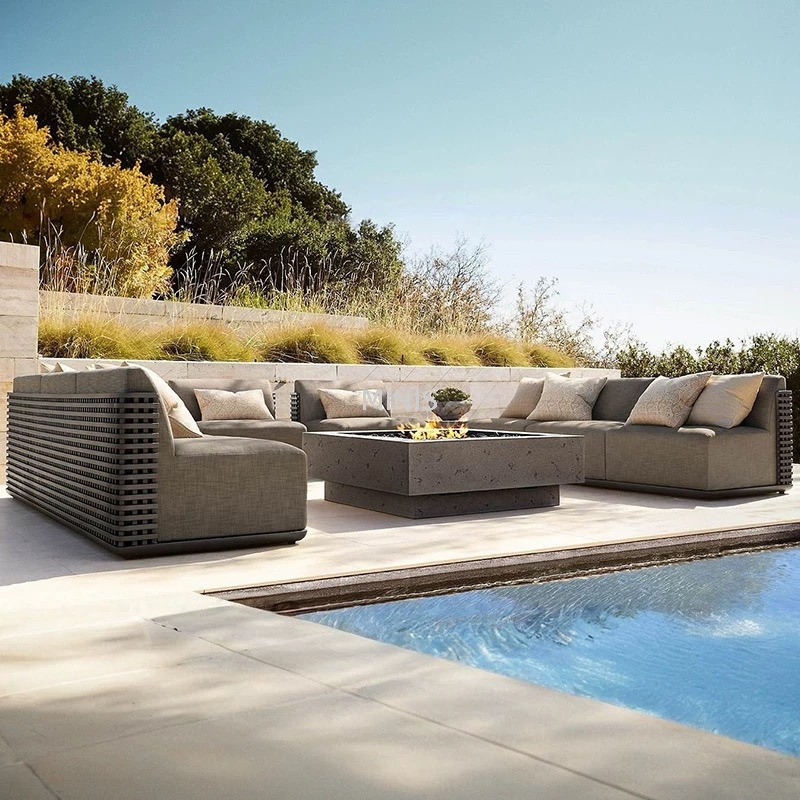
Sourcing a genuine outdoor garden teak sofa demands strict technical evaluation. You cannot rely on superficial appearance alone. The core evaluation criteria must begin with wood sourcing and precise grading. True commercial durability requires 100% Grade-A mature heartwood. Harvesters extract this premium lumber exclusively from the center of mature trees. Grade-A timber contains the highest concentration of protective natural oils. We strongly advise rejecting any quote containing Grade-B or Grade-C sapwood, as these younger exterior layers rot quickly.
Moisture content serves as a critical quality indicator. Raw timber inherently holds substantial environmental water. Manufacturers must professionally kiln-dry the lumber down to a strict 8-12% moisture level. This targeted drying process stabilizes the cellular structure. If a factory skips proper kiln-drying, the patio sofa set will suffer severe checking, cracking, or catastrophic warping once it encounters diverse global climates.
Structural joinery and hardware selection separate premium manufacturers from mass-market assemblers. Relying on glue and cheap screws guarantees rapid failure. We enforce strict mechanical guidelines for all structural connections:
Mortise and Tenon Joinery: All load-bearing frame intersections must utilize precise mortise and tenon joints.
Wooden Dowel Anchoring: The manufacturer must secure these joints using dense wooden dowels rather than metal fasteners.
Marine-Grade Hardware: Any visible hardware must consist of 304 or 316 marine-grade stainless steel or solid brass.
Zero Carbon Steel: You must aggressively reject any assembly utilizing zinc-plated or carbon steel screws, as they quickly rust and stain the timber.
Compliance and sustainability should finalize your material evaluation. Verifying legal harvesting practices protects your corporate reputation. You must demand SVLK (Indonesian Legal Wood) or FSC (Forest Stewardship Council) certifications. These documents prove the timber originated from responsibly managed plantations. Aligning your procurement strategy with strict ESG (Environmental, Social, and Governance) goals satisfies stakeholders and attracts eco-conscious end-users.
Teak Wood Grading Standards | ||||
Grade | Source Location | Oil Content | Color Profile | Commercial Rating |
|---|---|---|---|---|
Grade A | Center core of mature trees (Heartwood) | Maximum concentration | Rich, uniform golden-brown | Highly Recommended |
Grade B | Outer core, semi-mature sections | Moderate concentration | Lighter brown, some variation | Not suitable for heavy use |
Grade C | Outer edges (Sapwood) | Minimal to none | Pale, highly inconsistent | Strictly Avoid |
Deploying premium seating solutions requires transparent communication regarding natural material evolution. The patina transition represents the most common source of end-user friction. You must actively educate clients that unprotected teak naturally weathers to a beautiful silvery-gray. UV light oxidizes the outermost layer of natural oils. We must stress this is purely an aesthetic shift, not a structural failure. Providing clients with clear visual references of weathered timber prevents downstream dissatisfaction.
Climate-specific checking represents another frequently misunderstood reality. When furniture moves from a humid manufacturing facility to a low-humidity commercial environment, it undergoes acclimatization. You must acknowledge the reality of minor surface checks. These tiny hairline cracks appear at the ends of the timber grain. They demonstrate the wood naturally breathing and settling. Buyers must learn to distinguish acceptable superficial checking from deep structural splitting. Properly kiln-dried lumber rarely experiences catastrophic splitting.
Furthermore, maintaining pristine upholstery requires acknowledging cushion mildew risks. Even the absolute best exterior setups remain susceptible to surface mold under specific conditions. Mildew does not grow on the solution-dyed acrylic fabric itself. Instead, it breeds on dirt, pollen, and organic matter allowed to sit on damp cushions. Implementing routine cleaning protocols becomes mandatory for commercial operators.
Consider these essential maintenance best practices to ensure longevity:
Brush off loose dirt, leaves, and organic debris weekly.
Wipe down the wooden frames with a damp cloth periodically to remove airborne dust.
Treat minor fabric spills immediately using a mild soap and water solution.
Stand wet cushions on their edges to accelerate the internal drainage process.
Store cushions indoors or utilize breathable covers during prolonged off-season periods.
Selecting the right manufacturing partner dictates the ultimate success of your outdoor lounge procurement. The vetting process extends far beyond comparing unit prices. You must thoroughly assess a factory's Minimum Order Quantities (MOQs) and general scalability. Some boutique factories produce excellent samples but lack the infrastructure for volume orders. Conversely, massive facilities might refuse small-batch testing. Assessing their willingness to provide mixed-container shipments helps facilitate smooth project phasing. Mixed containers allow you to test multiple designs without overcommitting capital.
Prototyping and physical sampling eliminate critical blind spots. Never commit to a full wholesale contract based entirely on digital catalogs. You must order a physical sample frame and a dedicated cushion cross-section. Inspecting the cross-section allows you to verify the exact foam density and drainage capabilities. Physically examining the sample frame lets you confirm joinery precision and sanding quality. Smooth, hand-sanded edges indicate a factory committed to high-level craftsmanship.
Supply chain transparency heavily impacts your deployment schedule. You must rigorously evaluate the fine print on commercial warranties. Ensure the factory provides separate, clear warranty terms for the wooden frame and the fabric upholstery. Frame warranties should cover structural joinery failures, while fabric warranties must address abnormal UV fading.
Lead times present another significant logistical hurdle. Factoring in both manufacturing and global freight timelines prevents disastrous project delays. Custom or high-volume premium timber production typically requires 8 to 14 weeks. Factories rushing production often skip vital kiln-drying stages. Establishing clear communication regarding shipping milestones, customs documentation, and final delivery logistics ensures your exterior project launches exactly on schedule.
Sourcing exceptional exterior seating requires looking significantly past surface-level aesthetics. You must aggressively interrogate the wood grade, the moisture content, and the complex cushion architecture. Protecting your procurement investment means rejecting superficial polyurethane finishes and demanding precise mortise and tenon joinery. Taking these deliberate steps ensures the seating thrives in demanding commercial environments.
To successfully execute your next wholesale order, follow these immediate action steps:
Request a standardized technical specification sheet from all potential suppliers.
Compare their documented joinery standards and kiln-drying procedures against this guide.
Demand transparent proof of FSC or SVLK sustainability certifications.
Order a physical prototype and a cushion cross-section to benchmark genuine quality.
Establish clear expectations with end-users regarding the natural silver patina transition.
A: When constructed from genuine Grade-A heartwood and properly maintained, a commercial-grade sofa can easily last 20 to 30 years. The dense natural oils protect the core structure from rot and pests. Routine cleaning and proper winter storage further extend its operational lifespan in high-traffic commercial environments.
A: Most premium commercial cushions are highly water-resistant, not entirely waterproof. They utilize solution-dyed acrylic fabrics that repel surface water and reticulated foam cores that allow penetrating rain to drain rapidly. Fully waterproof cushions often trap internal moisture, leading to severe mold issues in humid climates.
A: You should request official SVLK or FSC chain-of-custody documentation. Additionally, inspect a physical sample. Grade-A timber exhibits a uniform, rich golden-brown color and a tightly packed grain structure. It should feel naturally oily to the touch and contain zero pale sapwood streaks.
A: Standard MOQs usually range from 10 to 20 units per specific design for direct factory orders. However, many flexible wholesale suppliers allow mixed-container shipments. This allows buyers to consolidate various seating pieces, dining tables, and loungers to meet a 20-foot or 40-foot container requirement.
A: No. Genuine Grade-A timber naturally maintains its weather resistance without any applied chemical sealants. Applying aftermarket oils is a purely aesthetic choice to preserve the golden color. If left untreated, the wood gracefully transitions to a protective, maintenance-free silvery-gray patina.


