
Views: 0 Author: Site Editor Publish Time: 2026-06-08 Origin: Site


High consumer demand for modern marble aesthetics in residential spaces is rapidly driving up wholesale sourcing volumes worldwide. Shoppers actively seek out premium textures and sleek profiles to elevate their home interiors. However, sourcing these heavy, fragile premium items creates a unique B2B challenge for purchasing managers. You must balance favorable unit costs against high landed costs, severe breakage risks, and strict quality control standards. If you overlook factory packaging protocols, profit margins quickly evaporate before inventory even reaches your warehouse.
We provide a vendor-neutral, evidence-based framework for evaluating wholesale suppliers and securing reliable supply chains. You will learn exactly how to validate material specifications efficiently and mitigate international transit risks. Ultimately, this comprehensive guide ensures your next bulk order protects your brand reputation while maintaining highly profitable retail margins.
Assessing material authenticity (natural marble vs. sintered stone) is critical for aligning unit cost with target retail pricing.
Base construction (specifically stainless steel grading) dictates structural integrity and total freight weight.
Profitable sourcing of designer furniture wholesale relies heavily on a supplier's packaging protocols (e.g., MDF crating) to mitigate transit breakage.
Total landed cost calculations must include specialized freight and insurance requirements for fragile stone goods.
Consumers consistently associate natural stone surfaces and sleek metal frames with high-end luxury. This perception allows a marble coffee table modern aesthetic to command premium retail positioning. Retailers frequently secure much higher gross margins here compared to standard wood or glass alternatives. Shoppers view natural stone as a permanent legacy investment. They gladly pay a premium price for substantial visual weight and unique organic veining. You can leverage this perceived value to establish higher price points across your catalog.
You should position the modern coffee table as an anchor product in your retail collections. It naturally acts as the visual center of any home. Surrounding living room furniture collections logically revolve around this central centerpiece. Retailers effectively bundle plush sofas, textured rugs, and metal side tables by using the central stone piece as a core design anchor. This strategic cross-merchandising increases the average order value per retail customer significantly.
Interior design trends shift frequently, but minimalist profiles offer strong market longevity. Consumers heavily prefer simple geometric shapes. They love mixed materials uniting cool polished stone and warm brushed metals. These specific elements ensure your bulk inventory will not rapidly age out in the warehouse. Classic material pairings endure seasonal design fads reliably.
Neutral Palettes: White and black stone blend seamlessly into diverse decor styles.
Mixed Textures: Pairing smooth stone against matte metal bases creates lasting visual interest.
Sculptural Bases: Asymmetrical or geometric legs maintain a modern edge year after year.
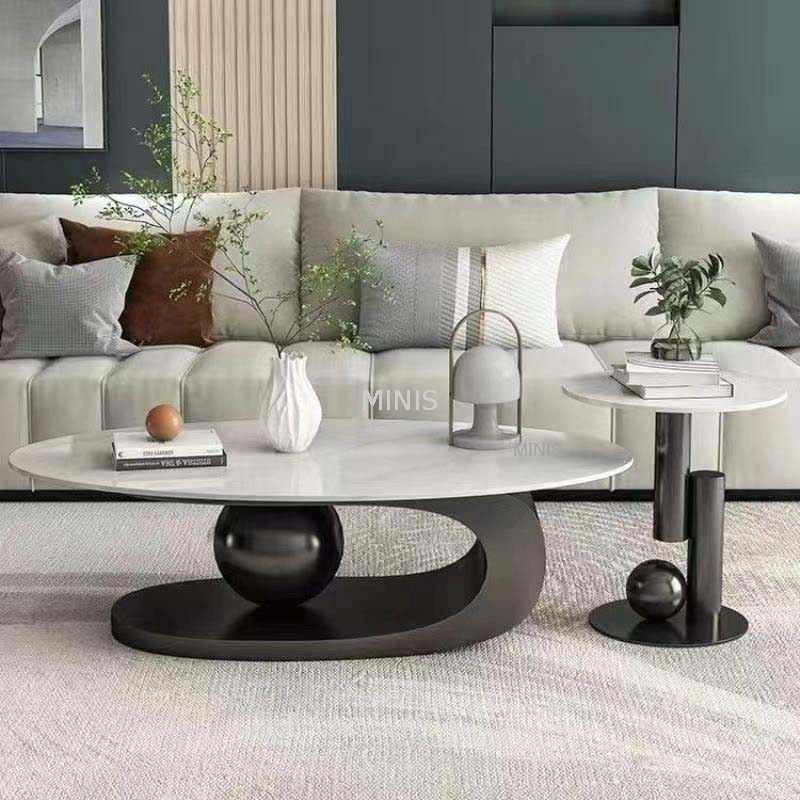
Natural marble varieties like Carrara and Volakas offer unmatched authenticity. However, they feature high surface porosity. Spills easily cause permanent staining if consumers leave them untreated. Engineered alternatives solve many practical problems. Sintered stone and faux marble laminates resist daily scratches effectively. They also reduce the baseline unit cost significantly. Your target customer demographic directly dictates which specific material suits your next marble top table order.
You must establish strict standard thickness requirements before placing orders. Reputable factories typically cut stone tops between 15mm and 20mm thick. Thinner slabs crack easily under minor pressure. Furthermore, factory-applied sealants represent a mandatory specification. Proper chemical sealing prevents transit moisture damage and shields against future end-user spills.
Material Comparison Chart | |||
Material Type | Porosity Level | Staining Risk | Unit Cost Impact |
|---|---|---|---|
Natural Marble (Carrara) | High | High (Requires Sealant) | Premium Pricing |
Sintered Stone | Very Low | Low | Moderate Pricing |
Faux Marble Laminate | Zero | Minimal | Budget Pricing |
Bases must handle extreme downward pressure safely. A solid stone slab weighs considerably more than standard wood tops. You must specify high-gauge stainless steel bases in your procurement contracts. Low-grade thin metals warp over time. They compromise structural integrity and pose safety hazards to consumers. Industry best practices recommend demanding 304-grade stainless steel for maximum load-bearing strength.
Finish processes matter equally for long-term durability. You should assess factory finishing techniques closely during audits. Electroplating creates a highly durable, visually consistent metallic surface. It binds directly to the steel at a molecular level. Powder coating offers excellent scratch resistance for high-traffic environments, but it can chip upon heavy impact. You must align the base finish with the intended retail price point.
Minimum Order Quantities (MOQ) directly impact your business cash flow. Standard MOQs for designer furniture wholesale typically range between 20 and 50 units per design. Higher MOQs tie up valuable warehouse space quickly. They demand significant upfront working capital. You should negotiate staggered delivery schedules during contract discussions. This specific approach balances your cash reserves effectively while keeping factories operational. Some advanced suppliers allow mixed-container flexibility for engineered stone variations.
You must evaluate a supplier's capacity to handle custom retail requests. Private label brands often require exclusive design modifications to stand out. Assess their ability to accommodate custom dimensions accurately. Ask if they can manufacture proprietary base designs without exorbitant mold fees. You also need flexibility regarding specific stone sourcing. A premium supplier will seamlessly procure specific regional stones to match your proprietary brand aesthetic.
You must analyze realistic factory production timelines against actual shipping durations. Inexperienced buyers often miscalculate material procurement delays. Natural stone extraction takes significant time. Suppliers do not always hold rare marble blocks in stock. A standard production run might take 45 days. International sea freight requires another 30 to 40 days. You must factor these combined timelines into your seasonal product launch schedules to avoid empty retail floors.
Inadequate factory packaging destroys profit margins instantly. You must detail non-negotiable packaging requirements directly in your purchase orders. Multi-layer protection represents the absolute minimum standard. Workers must apply custom-molded EPE foam tight against the stone surface. Rigid corner protectors prevent chipping during container loading. Finally, factories must construct reinforced MDF wood crating around each unit for international freight.
You should highlight the critical importance of factory drop-test certifications. Demand official compliance documents before authorizing any mass production runs. Standards like ISTA 3A simulate rigorous transit conditions realistically. A supplier refusing a third-party drop test generally indicates weak internal packaging protocols. Never compromise on crate construction simply to save minor unit costs.
The extreme physical weight of marble directly impacts shipping container optimization. Ocean freight logistics operate on limits regarding both volume (CBM) and total mass. Marble goods often hit maximum container weight limits long before they fill the available physical space. You will "weigh out" a container before you "cube it out". Smart buyers mix heavy stone tables alongside lighter bulky items to optimize container economics.
Standard carrier liability rarely covers the full value of damaged luxury goods. You must secure comprehensive cargo insurance specifically underwritten for fragile stone furniture. General policies often contain hidden exclusions regarding natural stone breakage. Verify your policy explicitly covers concealed damage discovered during warehouse uncrating.
You need a robust framework for auditing factory credentials before transferring deposits. Begin by verifying formal ISO quality management certifications. Request copies of their active export licenses immediately. Reviewing their previous market export history provides critical context. A factory consistently exporting to strict European or North American markets likely understands elevated quality expectations. Avoid suppliers lacking documented export histories to developed retail markets.
You must establish a strict protocol for ordering prototype samples. Never move straight to bulk production without physical verification. Inspect the prototype for distinct finish quality and seamless joint welding. Measure the actual physical weight against the supplier's quoted material weight. Discrepancies often reveal hidden material substitutions. You should also evaluate the consistency of the stone veining compared to initial factory photographs.
Prototype Inspection Parameters | ||
Inspection Area | Acceptable Standard | Common Failure Point |
|---|---|---|
Stone Surface | Smooth, evenly sealed, no micro-fissures | Inadequate chemical sealant application |
Metal Base Welding | Invisible joints, flush grinding, no slag | Visible weld beads, misaligned angles |
Packaging Crate | MDF construction, internal EPE foam blocking | Loose cardboard, inadequate edge protection |
Moving from vendor shortlisting to final PO placement requires disciplined execution. Follow this actionable framework closely:
Request formal quotations including precise packaging material specifications.
Commission an independent third-party audit of the factory premises.
Order a fully finished prototype and perform internal drop tests upon arrival.
Negotiate clear penalty clauses for transit breakage exceeding a 2% threshold.
Sign the final contract and place the initial purchase order with a 30% deposit.
Sourcing exceptional living room furniture requires carefully balancing aesthetic appeal against harsh logistical realities. Natural stone delivers unparalleled consumer prestige, but it demands rigorous handling protocols. You must remember the lowest factory unit price represents a dangerous false economy if inadequate packaging leads to high transit breakage rates. Margin preservation relies entirely on standardized quality control and optimized freight planning. We encourage purchasing managers and interior design distributors to initiate comprehensive supplier audits immediately. Use the outlined material guidelines, packaging requirements, and verification criteria to build a highly profitable, resilient supply chain.
A: Minimum Order Quantities typically range from 20 to 50 units per specific design. However, factories producing engineered stone variations or sintered stone often allow for mixed-container flexibility. This flexibility lets buyers test multiple designs without committing to massive inventory volumes upfront.
A: You must detail the necessity of requesting high-resolution factory photos and physical material swatches first. Following this, always order a fully finished prototype. Inspect the prototype carefully to verify natural veining consistency, evaluate the edge polishing, and test the factory-applied sealant quality.
A: We strongly highlight 304-grade stainless steel for its optimal strength-to-weight ratio. It offers exceptional resistance to moisture and corrosion. High-gauge stainless steel confidently supports extremely heavy stone tops without experiencing long-term structural failure, warping, or dangerous bending over time.
A: You must specify the absolute requirement for multi-layer packaging protocols. Factories should utilize dense PE foam wrapping alongside reinforced cardboard corners. Finally, they must encase the entire unit within rigid wooden crating. This wood often requires proper fumigation for international customs compliance.


