
Views: 0 Author: Site Editor Publish Time: 2026-05-15 Origin: Site


A sculptural silhouette instantly elevates standard room layouts. The deep, rich texture of a curved profile draws the eye naturally. It creates an immediate architectural focal point. This piece brings undeniable aesthetic appeal and fluid elegance to modern interiors. However, these striking designs present unique spatial challenges. Curved footprints demand specific room planning. Maintenance considerations also differ significantly from traditional linear seating. Flat walls and standard 90-degree corners often clash against sweeping crescent arcs. This geometric conflict frequently leaves awkward empty gaps in your floor plan. We will provide a realistic, measurement-based framework to help you navigate these practical hurdles. You will learn how to evaluate true seating dimensions accurately. We will help you select the ideal fabric performance tier for your lifestyle. Finally, we will show you how to position the sofa optimally. You can achieve stunning visual impact without disrupting daily traffic flow.
Spatial Reality: Curved designs require at least 20–30% more floor clearance than straight sofas of similar seating capacity.
Material Selection: Synthetic performance velvet offers superior longevity and stain resistance for high-traffic living rooms compared to traditional cotton velvet.
Placement Logic: Floating arrangements and bay window alignments yield the highest visual impact, whereas flush-wall placements often waste space.
Styling Geometry: Curved lounge furniture necessitates complementary rounded accents (e.g., oval coffee tables, curved rugs) to maintain functional ergonomics.
You must define what makes a sweeping silhouette functionally successful. A great curved frame facilitates natural eye contact among guests. It automatically angles people toward one another during conversations. It also actively breaks up rigid, boxy architectural lines. You introduce a softer, more organic energy into the room. But you must thoroughly understand the footprint trade-off.
The geometric arc naturally creates dead space behind the frame. Pushing a crescent piece flat against a straight wall wastes valuable square footage. The center touches the wall, but the ends curve aggressively outward. You need a complete shift in your floor-planning mindset. Do not attempt to hug the perimeter of the room.
Instead, use the curve to guide daily foot traffic. In open-concept spaces, the back of the sofa acts as a soft, psychological boundary. It directs human movement effortlessly around the seating zone. It prevents people from walking directly through the conversation area. Exceptional curved sofa design relies entirely on this fluid dynamic. It transforms heavy lounge furniture into an inviting, highly functional hub.
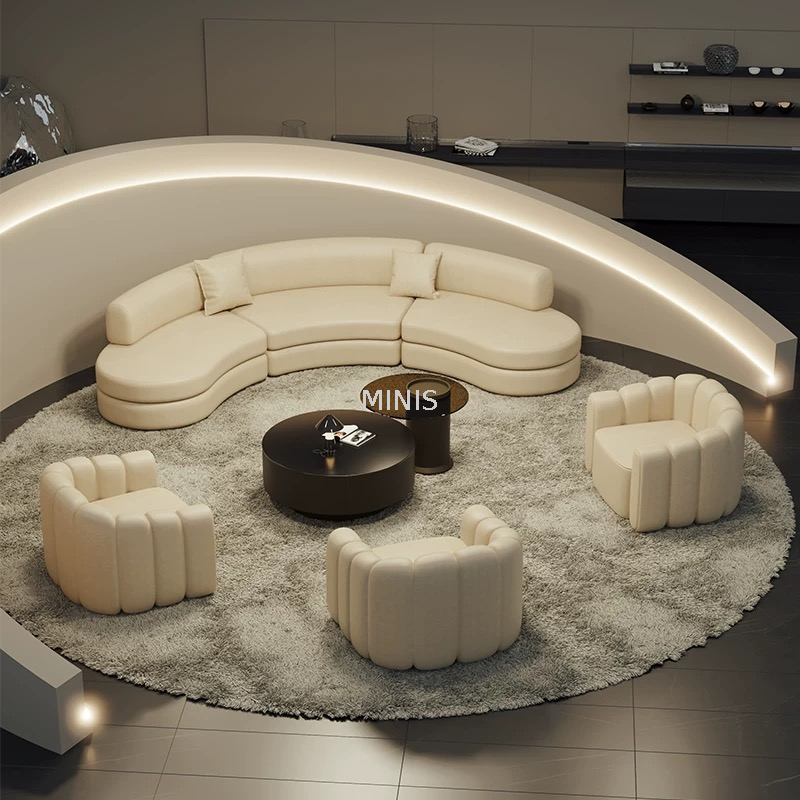
The aesthetic luxury of a plush fabric is undeniable. Yet, you must balance this visual beauty against daily use realities. Not all upholstery behaves the same under stress. High-end natural fibers boast incredible luster and depth. However, they demand significant upkeep. Cotton and silk blends crush easily under body weight. They also require strict dry-cleaning or professional care routines.
Conversely, modern performance blends use synthetic fibers like polyester or nylon. This alternative material framework changes everything. It is incredibly durable and built for rigorous daily activity. It actively resists liquid absorption, preventing rapid staining. Spills pool on the surface, making them easy to wipe away. We highly recommend synthetic options for busy households. They perfectly bridge the gap between upscale elegance and necessary utility. Quality velvet furniture should withstand daily life without losing its luxurious charm.
Material Type | Crush Resistance | Stain Resistance | Ideal Scenario |
|---|---|---|---|
Cotton / Silk Blend | Low | Low | Adult-only, formal spaces |
Performance Polyester | High | High | Everyday family use |
Nylon Synthetic Blend | Very High | High | Homes managing kids and pets |
We must transparently address the pet factor. Tight-weave fabrics excel at resisting animal scratching. Cats cannot snag their claws easily because the surface lacks loose woven loops. However, this dense texture acts as an absolute magnet for pet hair. You will need a reliable lint roller nearby. Maintaining a pristine living room sofa requires regular brushing. You must keep the directional pile lifted and clean.
Standard retail measurements often mislead excited buyers. A straight sofa measuring 90 inches offers distinct, predictable seating capacity. A curved piece spanning 90 inches from end to end yields significantly less actual sitting room. The sloping arc eats into the functional width. You must measure the inner seat curve, not just the overall outer length. Proper spatial planning ensures your living room seating remains comfortable rather than cramped.
You must enforce strict clearance rules around your new furniture. The unique shape requires specific breathing room to function properly.
Maintain a minimum of 30 to 36 inches of clear walkway space around the back curve.
Ensure 14 to 18 inches of distance between the seat edge and your coffee table.
Allow at least 24 inches of clearance near major doorways or room entry points.
Leave 10 to 12 inches of space if you place the back near a window to accommodate drapery.
Scale and proportion matter immensely. A deep-seated velvet curved sofa visually consumes more volume than a linear piece. To avoid overwhelming the room, measure your total square footage carefully. Large, cavernous rooms support grand, semi-circular designs beautifully. Small rooms require tighter, kidney-shaped profiles. The furniture must breathe within its designated boundaries.
Finding the perfect spot requires strategic thinking. You cannot simply shove the frame into the nearest corner. The sculptural shape demands intentional, thoughtful placement. Let us explore the most effective layout solutions for your home.
The Center Float: This is the authoritative approach for open floor plans. Place the sofa in the exact middle of the room. It uses the sweeping back as a natural divider. It separates the lounge area from dining zones seamlessly.
The Corner Anchor: Asymmetrical or kidney-shaped pieces work beautifully here. They soften harsh 90-degree room corners effectively. The curve creates a cozy, naturally enclosed conversation nook.
The Bay Window Alignment: You can mimic existing architectural curves. Tucking a crescent piece into a large bay window delivers a seamless, custom-built look. It maximizes natural light exposure across the fabric.
You must actively avoid specific layout risks. Never force a deep crescent frame into a narrow, rectangular room. It will immediately choke the primary walkway. The sweeping back will protrude awkwardly into your daily traffic paths. Always prioritize functional flow over forced aesthetics. A beautiful piece loses its charm if you constantly trip over it.
Geometry matching dictates your accessory choices. Sharp rectangular coffee tables fail ergonomically near curved cushions. The straight edges clash horribly against the sloping seats. People will struggle to reach their drinks comfortably. We strongly recommend oval, round, or nesting tables instead. Their smooth, continuous perimeters complement the upholstery perfectly.
Pairing secondary seating also requires a delicate balance. You want accent chairs that complement the primary piece without competing for attention. Avoid bulky, square armchairs. Low-profile swivel chairs are excellent choices. They echo the rounded aesthetic and offer highly flexible viewing angles. A thoughtfully curated sofa set balances distinct shapes while maintaining cohesive flow.
Take action before making a final purchase. Use blue painter's tape to map the exact footprint on your floor. Mark the deepest protruding part of the arc clearly. Walk around the taped perimeter multiple times. This physical mock-up reveals hidden spatial conflicts instantly. It ensures you buy the absolute correct scale for your daily life.
A sweeping velvet design represents a significant interior investment. It demands intentional spatial planning and acute fabric awareness. Keep these actionable steps top of mind before checking out.
Order physical fabric swatches. Test them under your specific home lighting and check for easy stain resistance.
Measure all doorway and hallway clearances carefully before scheduling delivery. The rigid, arched frame can easily complicate narrow entryways.
Use the painter's tape method to verify functional walkway clearances and coffee table proximity.
Select secondary seating that shares similar rounded geometry to ensure cohesive styling.
Browse high-quality performance collections to balance luxury aesthetics with everyday durability. Consult a design specialist or request a sample kit today. Making an informed decision ensures your space remains both beautiful and highly functional.
A: Yes, but you must address the empty gap it naturally creates. Pushing the arc flat against a wall wastes space and looks physically awkward. We suggest adding a curved console table directly behind the frame. This fills the void beautifully. It provides surface space for lamps and anchors the arrangement effectively.
A: It is highly practical if you choose the right fabric tier. Traditional silk or cotton velvet requires high maintenance. However, synthetic performance velvet woven from polyester or nylon stands up effortlessly to daily wear. It resists liquid absorption and crushes less easily, making it perfect for busy living rooms.
A: Start by vacuuming the surface using a soft upholstery brush attachment. This removes loose dust and hidden pet hair. Next, use a handheld fabric steamer on a low heat setting. Hold it a few inches away to gently lift the flattened pile. Brush the fibers gently in their natural direction.
A: Round rugs provide excellent visual symmetry and highlight the crescent shape beautifully. Alternatively, use a massive oversized rectangular rug to anchor the entire furniture grouping. Organic or irregular-shaped rugs also pair perfectly. They complement the fluid lines without imposing rigid geometry onto the space.


